About
Author: Halldor Laxness (Iceland)
Genre: Socio-Political
Setting
Place: Iceland
Time: 1800s – 1910s
My Rating (see what this means)
My Subjective Rating: 4
My ‘Objective’ Rating: 3.38
Introduction
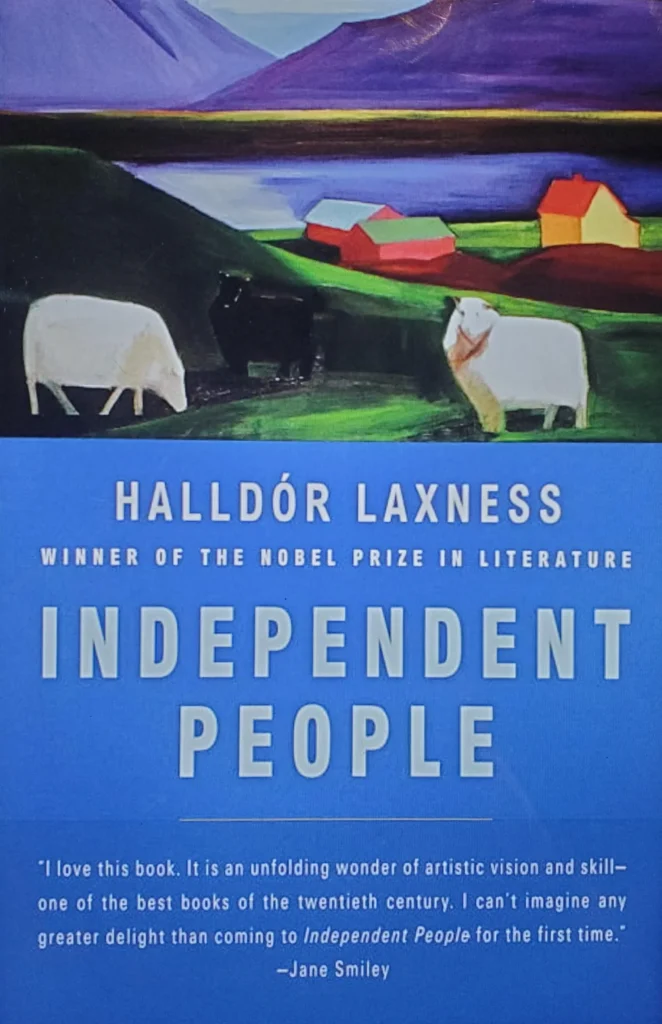
Bjartur of Summerhouses, the protagonist of Halldor Laxness’ ambitious novel ‘Independent People’ is a hard hard man – much harder than what the extremely challenging circumstances of early 20th century Iceland for a poor ordinary sheep farmer would warrant.
Independent People follows Bjartur from the point when he attains his independence after 18 years of slaving for someone else and the decades he spends defending this independence against nature, economic development, local cooperatives, the dreams of his family and the ghosts haunting his lands for centuries. The costs are terrible enough for independence-loving readers to wonder what independence is in the first place!
A marvellous work of historical fiction – Independent people is not an easy read – it is grim, dense, and demands full attention of the reader. It is also vividly descriptive, beautifully written and has a subtle dry humour built into the grimness. A worthy winner of the Nobel prize.
Discussion
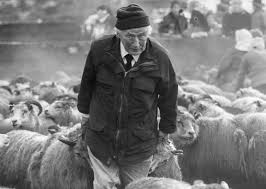
I was never going to be able to relate to Bjartur of Summerhouses. For him independence is slaving about 16-hour or longer days in cold and harsher cold, looking after sheep, as long as he could do it on land he owned, never mind the ghosts said to be haunting the said land. Add to it a multi-year debt which cannot be paid off without such hard work and notions of independence seems laughable.
Add to this Bjartur’s absolutely-lacking-in-charm personality – for he is nightmarishly stubborn, brutally unsympathetic and egotistical, rude and plain stupid in some of his beliefs – that he constantly tests whatever sympathy and quiet admiration the reader can muster for his quest to remain independent.
Well to be fair, Bjartur was independent in a practical sense of the word. He no longer had to slave for the Bailiff of Rauthsymri. He had his own sheep to care about and seem to be genuinely obsessed with them for it to be plausible he enjoyed his hard life – however incredible happiness would seem in such circumstances.
This makes him a heroic – though certainly not likeable – protagonist. For Bjartur’s independence was up against formidable enemies – from wily bankers and bailiffs, intestinal worms that devour livestock, the ruthless forces of Icelandic weather, and the realities of economic fluctuations. He stood strong and proud and rigid against these enemies but there was certainly collateral damage – the first victims obviously being members of his family including –
- His first god-fearing wife – of an entirely-devoid-of-love marriage – who dies out of neglect and longing to eat a decent meal – while Bjartur was busy searching for his lost sheep.
- His second happenstance wife – who gave him three boys and countless miscarriages and dies after Bjartur kills her beloved cow, afraid it will eat away the food meant for Bjartur’s sheep.
- His daughter, who he genuinely cared for, but abandons after she gets pregnant by a drunk sick teacher, while Bjartur was away to earn money to buy more sheep.
- And his three sons Helgi, Gvendur and Nonni who spent their time of the croft slaving after Bjartur’s sheep until they die or leave or fail to leave.
Sheep obviously are central to Bjartur’s priorities for as long as he had sheep and his land – he was an independent man. Sentimentality about death or sympathy for his family, if it meant loss of independence – he wouldn’t tolerate.
A Curious Connection
I don’t know whether it was a fateful coincidence – or me finding patterns where there are none – but I happened to re-watch the ‘Breakfast at Tiffany’s movie the same week I pondering the meaning of Bjartur’s independence. The carefree, fun loving New York socialite Holly Golightly of the movie would be poles apart from anything Bjartur of Summerhouses – the poor Icelandic farmer would represent. But there was one commonality – they both fiercely value their independence and refuse to be caged.
Holly’s independence gets challenges at the end of (well at least) the movie giving me a good anchor for thinking about Bjartur’s independence. (The book ends differently – which I preferred) –
“You call yourself a free spirit, a wild thing. And you’re terrified somebody’s going to stick you in a cage. Well, baby, you’re already in that cage. You built it yourself. And it is not unbounded in the west by Tulip, Texas or the east by Somaliland. It’s wherever you go. Because no matter where you run, you just end up running into yourself.”
Now it would be difficult to argue that Bjartur build any cages for himself – he fiercely avoided obvious cages easy to walk into –
- Additional debt (event if her had to revert to cruelty)
- Charity (even if conditions warrant it)
- Religious or superstitious dogma about cursed lands and the inevitability of failure
And it would be unfair to call a poor decision of building a badly constructed house – if only to full a promise to someone you love – as caging oneself.
What perhaps the cage for both Holly and Bjartur was being caged in an ideology of independence – without realising what the point of wanting to be independent is. Perhaps for a poor Icelandic farmer like Bjartur’s – independence was never really possible to begin with. Less cruel choices would only have made his eventual loss of freedom come earlier. You are only left with a reluctant admiration for him to maintaining his independence as long as he did.
At least, Nonni managed to escape to America.
Picture Credits:
- Cover Picture: https://laxnessintranslation.blogspot.com/2010/03/independent-people.html
- icelandmag.is/article/sheep-farmers-compete-ram-judging