About
Author: Ernesto Sabato (Argentina)
Genre: Existential
Setting
Place: Buenos Aires, Argentina
Time: 1500s
My Rating (see what this means)
My Subjective Rating: 3
My ‘Objective’ Rating: 2.29
Introduction
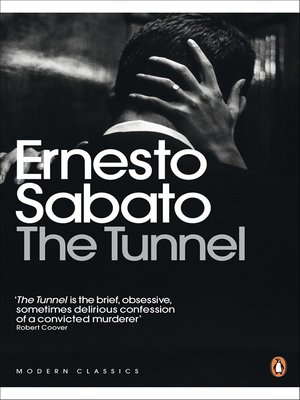
‘The Tunnel’ by Ernesto Sabato revolves around the story of one Juan Pablo Castel – a celebrated painter – who murdered his lover Maria Iribarne a few months ago – and is now, in prison, finally taking the time to tell us why.
It doesn’t take us long to realise that there is something wrong with Castel. There is an obvious madness within him – despite his constant calls to reason and reasonableness. He first becomes obsessed with a woman who seem to have noticed something worth noticing in a painting of his. Then when chance brings them together, he is extremely impatient about pursuing her, and when they manage to sleep together and be together (despite her blind husband), he remains insecure about how she really feels about him.
He comes off as a pitiable prisoner of his own mind – its obsessions and impatience and insecurities. Obviously whatever pity the reader might feel for him is quickly subsumed by (at best) irritation – as the cruelty and stupidity of his actions and choices come to fore.
The Tunnel is a about a man’s unravelling as he is trapped in the tunnel of his own mind
Synopsis
The Tunnel is not a long book. It is a dark, funny at times, and often repetitive as we get lost into the mazes of Castel’s mind. Insecurities reign supreme and his conflicting thoughts and actions do a remarkable job of communicating a certain madness.
For instance – he writes a nasty letter to the only woman who understands him out of love and frustration, reconsiders it immediately after he posts it. Spend hours arguing with the post office to get it back, and when they don’t is satisfied with the fact that they didn’t. And such cycles go on and on in his life.
Arundathi Roy, in her book – The God of Small Things, puts an argument – “The secret of great stories is that they have no secrets…. In the Great Stories you know who lives, who dies, who finds love, who doesn’t. And yet you want to know again”
In Castel’s story – we already know then ending – Castel will be in prison, having murdered the only woman he loved – Maria Iribarne. It becomes fairly obvious that Castel is a mad man. The murder understandably could only be an act of madness. I was still taken aback when upon reaching the ending – I was slightly disappointed at the anti-climax of it – in a murder I knew would happen. Was I expecting – a sort of a redemption arc for an otherwise deplorable man? or a more valid reason to justify a murder?
Perhaps – that’s the most scary thing about a madness – the constant hope that it is not really madness.
Picture Credits:
- Cover Picture: El Tunel Movie