About
Author: William Travis (Seychelles)
Genre: Auto-biographical
Setting
Place: Seychelles
Time: 1960s
My Rating (see what this means)
My Subjective Rating: 3
My ‘Objective’ Rating: 3.04
Introduction
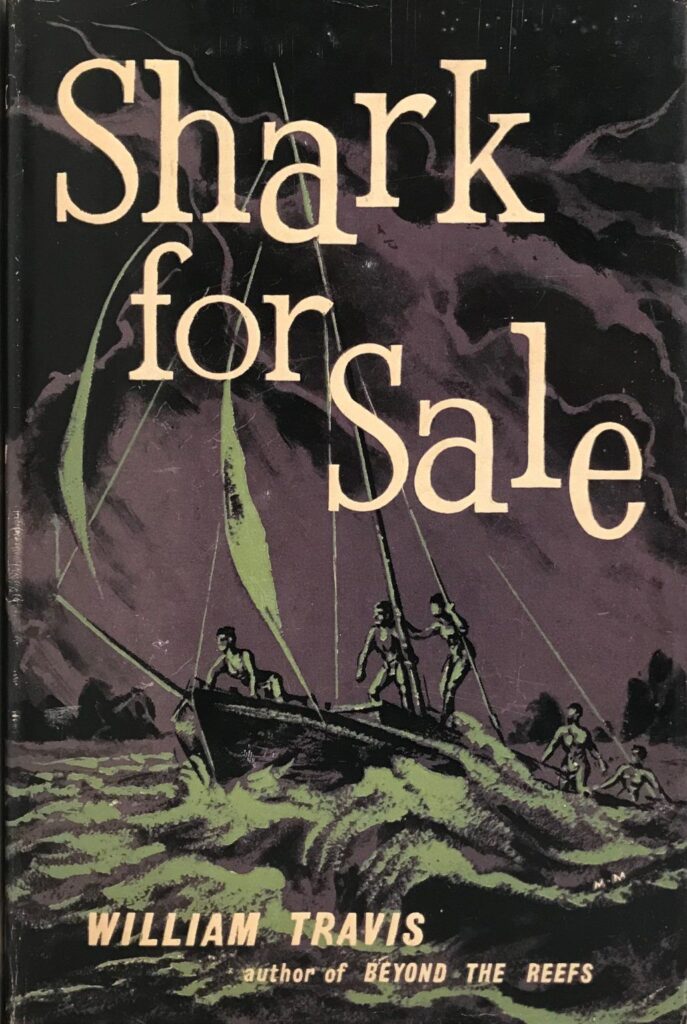
William Travis, in his autobiographical work Shark for Sale, recounts the years he spent as the owner of a shark-fishing vessel in the Seychelles.
Spanning several chapters of his life, the book traces his attempt to build a commercially viable shark trade while offering vivid portraits of his crew and their daily struggles. Alongside these human stories, Travis provides a meticulous account of the shark-fishing industry itself—detailing equipment, methods, anatomical distinctions between species, and behavioural traits in exhaustive depth.
At times, the technical passages can feel overwhelming, especially for readers like me who grew up in the arid towns of India, far removed from the sea, and who have never fished (nor intend to, beyond tourist gimmickries). Yet, despite the density of information, Travis’s skill as a writer transforms the narrative into a compelling treatise on a world I might otherwise never have entered.
In short, Shark for Sale is both an engrossing chronicle of a unique livelihood and a surprisingly enjoyable read—even for someone with no personal connection to fishing.
Review
Written as narrative non-fiction, Shark for Sale is not without its shortcomings.
First, most of the crew receive only cursory attention. While Travis sketches personalities and backstories, they rarely emerge as vivid individuals; instead, they remain faceless figures in the background. Even Travis himself, as narrator, reveals little beyond his obsession with building a commercially successful shark-fishing enterprise. His personal life and family remain largely absent.
Second, there is an air of uncertainty around the authority with which Travis presents his exploits. His daring initiatives—such as plunging into shark-infested waters at night to observe behavior—and his claims of pioneering techniques that made his vessel the most efficient in Seychelles waters, are difficult to verify. With no informed critiques available, the reader is left to wonder how much is fact and how much is embellishment.
Third, despite the book’s readability, it often overwhelms with detail. The sheer volume of technical information—on equipment, methods, and shark biology—can feel excessive, especially for readers outside the fishing world.
That said, the book has much to offer. It can be enjoyed simply as a well-structured work of narrative fiction, rich with reflections on the elusive rhythms of a seafarer’s life, its brutal realities, and the interplay of success and failure. Above all, it is a testament to passion. Travis’s enthusiasm for the trade is infectious, and it is this energy that ultimately makes Shark for Sale a rewarding read.